Brandy
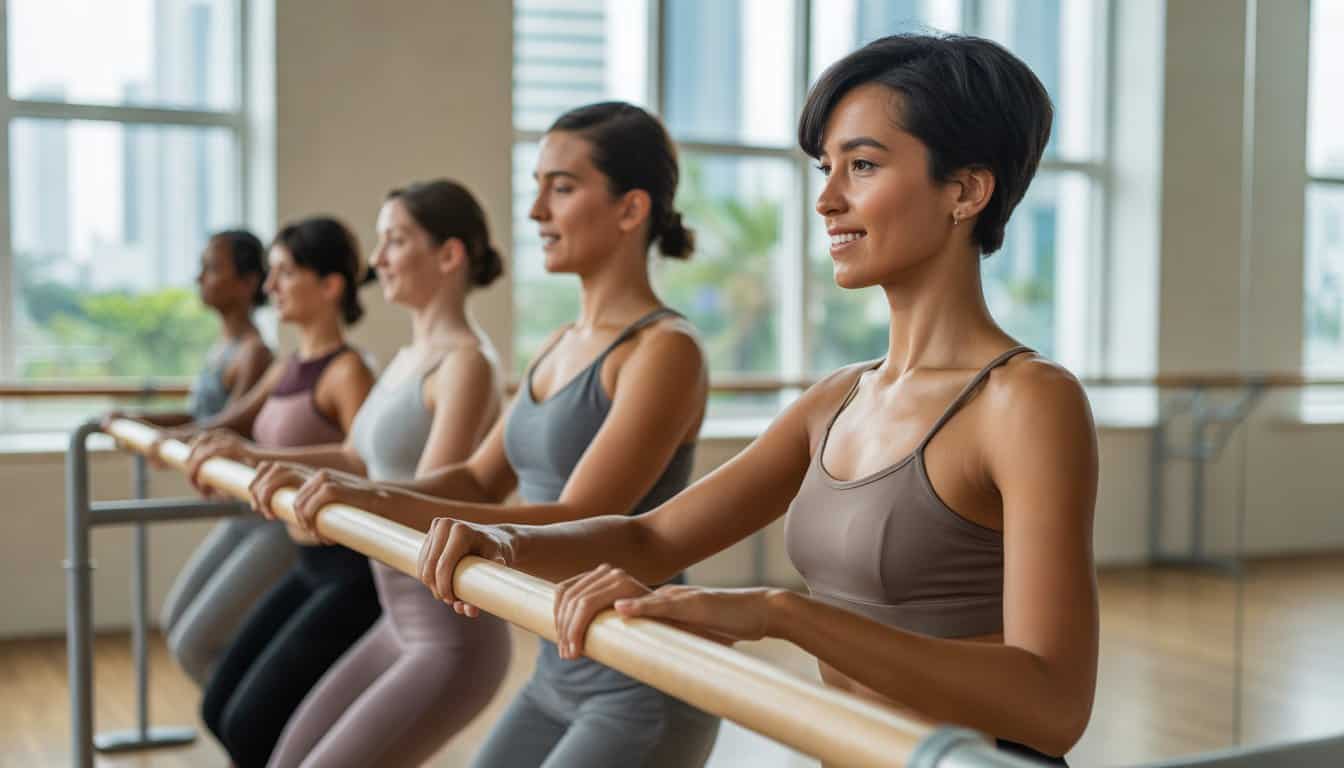
What a Barre Class KL Actually Is
A barre class KL usually combines ballet-inspired movements, light strength work, and low-impact conditioning. It is designed to challenge the muscles through small, controlled movements rather than large, fast exercises. That alone makes it different from many gym classes that rely on heavy cardio or high-impact jumps.
For many people, the first impression is that barre looks “too easy” because the movements are small and the setup is simple. In reality, the method relies on precise alignment, muscle endurance, and constant tension. The result is a workout that can feel deceptively demanding even without dramatic movement. Related source: barre pilates.
Myth 1: Barre Is Just Ballet for Dancers
This is one of the most common misunderstandings. While barre takes inspiration from ballet training, it is not a dance class and it does not require dance experience. The movements are adapted so that beginners, office workers, and regular fitness enthusiasts can participate without needing formal technique.
In a barre class KL, the focus is usually on posture, core engagement, balance, and controlled repetition. The goal is not to perform choreography or master ballet lines, but to build strength and stability in a structured, accessible way.
How Barre Compares with Other Popular Classes
Barre is often compared with yoga, Pilates, and traditional strength classes, but each serves a different purpose. Yoga may prioritise flexibility and mindfulness, Pilates tends to emphasise core control and rehabilitation-friendly movement, while strength training often uses heavier loads and more obvious muscle building patterns. Barre sits somewhere in between, combining posture work, endurance, and light resistance.
For people choosing between options in Kuala Lumpur, barre can be appealing because it offers a full-body workout without the intensity of high-impact classes. It may suit those who want variety, body awareness, and toning-focused training rather than maximal lifting or fast-paced cardio.
Myth 2: Barre Does Not Count as Real Exercise
This myth usually comes from the fact that barre classes look graceful and controlled. However, the challenge often lies in how long muscles are held under tension. Repeated pulses, isometric holds, and small-range movements can create serious fatigue, especially in the thighs, glutes, shoulders, and core.
Although barre may not leave every participant breathless in the same way as sprint intervals, it still qualifies as effective exercise. It can improve muscular endurance, posture, and movement control, which are all valuable parts of a balanced fitness routine.
What to Expect in a Typical Barre Class KL
A typical barre class KL often begins with a warm-up, followed by sections that target the legs, glutes, core, arms, and back. Many classes use a ballet barre for balance, but some studios also include mats, resistance bands, light dumbbells, or small exercise balls.
The pace is usually structured and repetitive, with an instructor guiding participants through short sequences. Because the movements are low-impact, the class can be approachable for different fitness levels, although beginners may still feel the burn quickly if they are not used to controlled muscle work.
Myth 3: Barre Is Only for Women
Another outdated belief is that barre is a female-only workout. In reality, the method is gender-neutral and can benefit anyone who wants better posture, joint-friendly conditioning, and stronger stabilising muscles. Fitness goals such as balance, mobility, and endurance are not limited by gender.
Men in particular may find barre useful as a complement to running, cycling, weight training, or sport-specific training. The emphasis on control and alignment can help support movement quality, which may be overlooked in more explosive exercise styles.
Benefits That Make Barre Popular in Kuala Lumpur
One reason barre class KL options continue to attract attention is their versatility. Many people appreciate that the workout feels effective without being overly intimidating. It can be adapted for different fitness backgrounds, making it suitable for beginners, return-to-fitness participants, and experienced exercisers alike.
Other commonly valued benefits include improved posture, stronger core engagement, better lower-body endurance, and a sense of body control. For people with busy schedules, the class format can also feel efficient, since it often works several muscle groups within a single session.
Myth 4: Barre Will Make the Body Bulky
Some people avoid barre because they think it will create bulky muscles. That concern is usually misplaced. Barre training generally uses light resistance and high repetitions, which is more associated with muscular endurance and definition than significant size increase.
Of course, body composition depends on many factors, including overall training, nutrition, and genetics. But for most participants, barre is better understood as a conditioning method than a muscle-building programme in the bodybuilding sense.
How to Choose the Right Barre Class KL
When comparing options, it helps to look beyond the class name and consider the teaching style, class size, and overall atmosphere. Some studios lean toward a more traditional ballet-inspired format, while others blend barre with Pilates, mobility work, or light cardio. The right choice depends on personal goals and comfort level.
It also helps to check whether the class is beginner-friendly, whether modifications are offered, and whether the instructor gives clear alignment cues. In a city like Kuala Lumpur, where fitness choices are wide-ranging, the best barre class is usually the one that feels both safe and sustainable.
Myth 5: Results Should Be Instant
Like most exercise methods, barre works best with consistency. Some people may feel more upright, more aware of their posture, or more engaged through the core after a few classes, but visible changes usually take time. Quick promises are often misleading, especially when they ignore sleep, nutrition, and overall activity levels.
A more realistic expectation is steady progress in strength, control, and endurance over several weeks. That gradual improvement is one reason many participants keep returning to barre: the changes may be subtle at first, but they can be meaningful and long-lasting.
Who Barre Class KL Is Best Suited For
Barre class KL can suit a wide range of people, especially those who want a lower-impact workout that still feels challenging. It may be a strong fit for beginners seeking structure, professionals looking for an after-work class, and regular exercisers who want to improve stability and form.
It can also appeal to people recovering from a period of inactivity, provided they choose an appropriate class level and listen to their body. While barre is not a replacement for medical guidance when injuries are involved, its controlled format often makes it easier to scale than more intense group workouts.